Raccoons can cause significant damage in an attic. They often tear apart insulation and ductwork, leading to air leaks and higher energy costs. Their sharp claws and strong teeth can compromise structural integrity by damaging roof materials, resulting in leaks. Raccoons may also chew on electrical wiring, creating fire hazards. In addition, their droppings and urine contaminate areas, causing unpleasant odors and health risks. The combination of these damages can lead to costly repairs and a decline in indoor air quality. Understanding these common issues can help address and prevent further harm.
Key Article Highlights
- Raccoons tear apart attic materials, causing significant structural damage to beams and roofing, leading to leaks and mold growth.
- Disturbed insulation from raccoons can degrade, resulting in poor temperature regulation and increased moisture retention.
- Chewing on electrical wires creates exposed wiring, posing serious fire hazards and electrical risks.
- Raccoon feces and urine contaminate insulation, promoting mold growth and emitting strong odors that affect indoor air quality.
- Air leaks from damaged insulation lead to increased energy costs and inefficient HVAC system performance.
Structural Damage
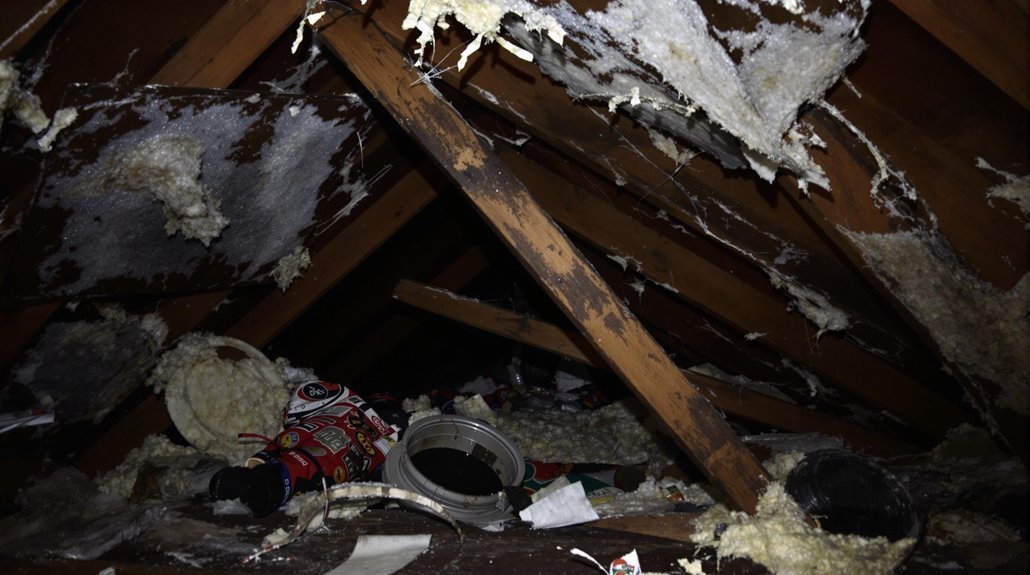
Raccoons can cause considerable structural damage when they invade an attic. These animals are known for their strong claws and sharp teeth, which they use to tear apart materials. Raccoon behaviors, such as scratching and digging, can lead to weakened beams and compromised roofing. Over time, their activities create openings that can allow water and pests to enter the home, leading to further damage.
Home prevention is essential to protect your structure from these intrusions. First, inspect your attic regularly for signs of raccoon presence, such as droppings or tracks. Seal all potential entry points, including gaps around vents, chimneys, and eaves. Use sturdy materials like metal flashing to close off these areas. Additionally, secure trash bins and remove food sources from around the house to deter raccoons from approaching.
Finally, educate yourself about raccoon behaviors. Understanding their habits can help you implement effective prevention strategies. By taking these steps, homeowners can considerably reduce the risk of raccoon invasions and protect their attics from costly structural damage.
Insulation Contamination
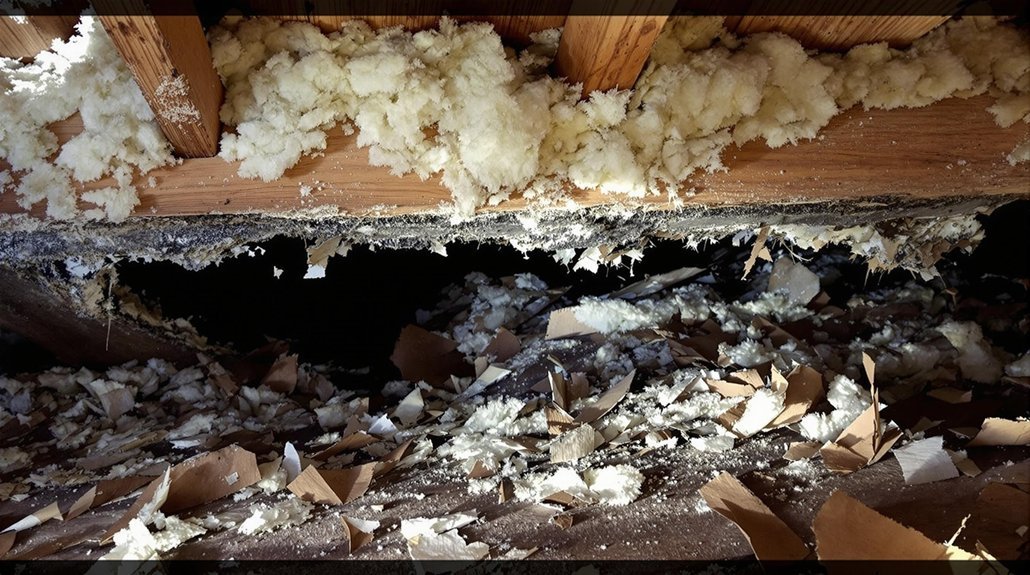
Structural damage from raccoons can lead to another significant concern: insulation contamination. When raccoons invade an attic, they often disturb or damage the insulation. This disturbance can result in insulation degradation, which reduces its effectiveness in regulating temperature. Contaminated insulation can also become a breeding ground for mold and bacteria.
Raccoons leave behind droppings, urine, and other waste materials. These substances can seep into the insulation, leading to moisture retention. Excess moisture can further degrade the insulation, making it less efficient. As insulation loses its ability to insulate properly, energy costs can increase.
Moreover, the presence of contaminated insulation poses health risks to occupants. Breathing in particles from degraded insulation can lead to respiratory issues. Consequently, it is vital to address insulation contamination promptly.
Cleaning and replacing contaminated insulation is often necessary. This process not only restores the integrity of the attic but also protects the health of those living in the home. To summarize, insulation contamination is a serious issue that requires immediate attention following a raccoon infestation. Proper remediation can prevent further damage and guarantee a safe living environment.
Electrical Wiring Issues
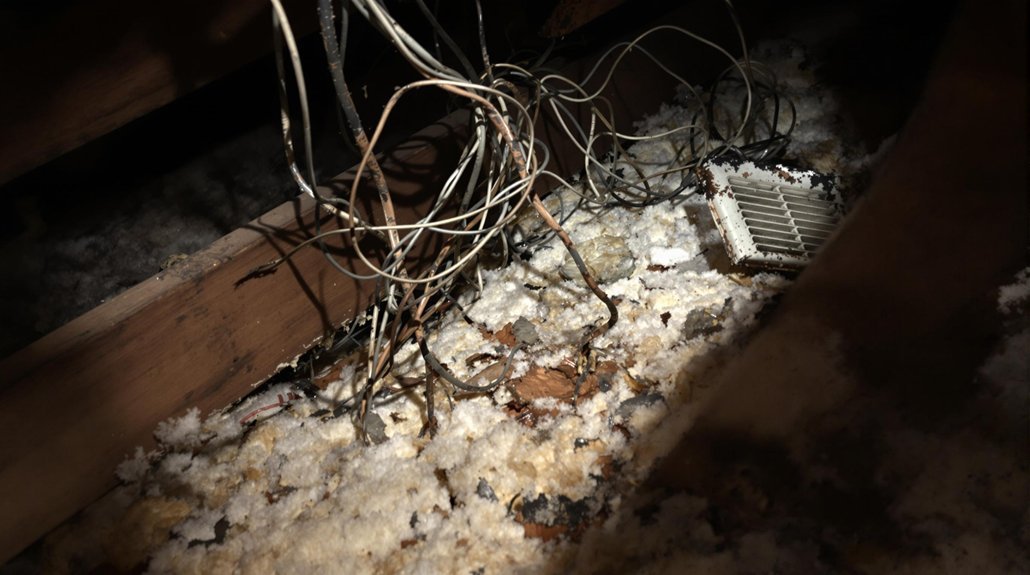
When animals invade an attic, they can also cause considerable damage to electrical wiring. Raccoons, in particular, are known to chew on wires, leading to various issues. This chewing can create exposed wires that pose serious risks. One major concern is electrical shorts. These shorts can disrupt power flow and may lead to circuit failures.
Furthermore, exposed wires are a major fire hazard. If the insulation is damaged, the risk of sparks increases greatly. A small spark can ignite nearby materials, leading to a dangerous fire situation in the home.
It is essential to address these electrical wiring issues promptly. Homeowners should inspect their attics and look for signs of animal activity. If there is evidence of chewing or damage, it is vital to contact a professional electrician. These experts can assess the situation and make necessary repairs.
Ductwork Destruction
Damage to electrical wiring is not the only concern when raccoons invade an attic. Raccoons can also cause significant destruction to ductwork. Their presence often leads to torn insulation and broken ducts. This damage can create air leaks, which affects heating and cooling systems. Consequently, energy bills may rise, and indoor air quality can suffer.
Homeowners must consider duct repair options after a raccoon infestation. Repairing the ductwork is vital to restore efficiency. Options include sealing leaks, replacing damaged sections, or even installing new ducts if necessary. Each option varies in cost and effectiveness, so consultation with a professional may be beneficial.
To prevent future raccoon invasions, homeowners should take certain preventative measures. Securing entry points is imperative. This can include installing screens over vents and repairing holes in the attic. Regular inspections of the attic and ductwork can help catch issues early. By taking these steps, homeowners can protect their property from the damages caused by raccoons. Addressing ductwork destruction promptly will guarantee a safe and energy-efficient home environment.
Roof Damage
Raccoons can cause significant roof damage when they gain access to an attic. Their strong paws and sharp claws allow them to tear through roofing materials. This damage can lead to various problems, primarily roof leaks. When raccoons remove or disturb shingles, they create openings in the roof. These openings can allow water to seep into the attic space. Over time, even a small leak can cause major issues, such as mold growth and wood rot.
Shingle damage is another concern. Raccoons often pull off shingles while trying to get inside. This not only exposes the underlying layers of the roof but also weakens the overall structure. If the shingles are not replaced quickly, it can result in further degradation. Homeowners may face costly repairs if roof damage is left unchecked.
To prevent such damage, it is crucial to secure the roof and prevent raccoons from entering. Regular inspections can help identify potential vulnerabilities. Addressing issues promptly can save homeowners from significant repair costs and protect the integrity of their homes. Taking these steps is essential for maintaining a safe and secure living environment.
Pest Infestation
Pest infestation can be a serious issue following raccoon damage in an attic. Identifying entry points is essential to prevent further issues. Additionally, the noise and disturbance from pests can lead to health risks that need to be assessed.
Entry Points Identification
How can homeowners effectively identify entry points for raccoons in their attics? First, they should conduct a thorough inspection of the exterior of their homes. Raccoons can squeeze through small openings, so checking for gaps is essential. Common entry points include vents, chimneys, and areas around pipes.
The following table summarizes key areas to inspect for entry points, along with potential damage:
| Area | Signs of Entry | Potential Damage |
|---|---|---|
| Vents | Chewed edges | Damage to ductwork |
| Roof Junctions | Loose shingles | Water leaks |
| Chimneys | Displaced caps | Fire hazards |
| Utility Lines | Gaps around lines | Structural issues |
Noise and Disturbance
Noise and disturbance in an attic can often signal the presence of a raccoon infestation. Homeowners may hear distinct raccoon sounds, such as scratching, thumping, or chattering. These noises typically occur during the night, as raccoons are nocturnal animals. Their active hours are usually between dusk and dawn, making nighttime disturbances a key indicator of their presence.
The sounds may vary in intensity and frequency. Sometimes, the noises can be loud and disruptive, causing concern for those living below. Raccoons may be searching for food, moving about the attic, or engaging in playful behavior with one another. This activity can lead to significant damage over time, as they may tear insulation, chew on wires, or create holes in the structure.
In addition to noise, homeowners might notice other signs of a raccoon infestation, such as droppings or torn materials. Recognizing these indicators quickly is vital in addressing the problem. If you suspect raccoons are present, it is important to act promptly to prevent further damage and restore peace to your living environment.
Health Risks Assessment
Raccoon infestations pose significant health risks to homeowners and their families. These animals can carry various diseases that may be harmful to humans. One major concern is the transmission of diseases through their droppings and urine. Raccoons are known carriers of raccoon roundworm, which can affect the brain and cause severe health impacts if ingested.
Additionally, raccoons can spread leptospirosis, a bacterial infection that can lead to liver and kidney damage. Their presence in attics can also attract other pests, such as fleas and ticks, which can carry diseases like Lyme disease.
When raccoons invade an attic, they create a hazardous environment. Their feces can contain pathogens that pose serious health risks. Breathing in particles from contaminated areas may lead to respiratory issues and other health complications.
It is essential to address raccoon infestations promptly. Homeowners should seek professional help to remove these animals safely and to clean up any waste they leave behind. Taking these steps can help mitigate the health risks associated with raccoon infestations, ensuring a safer living space for everyone.
Feces and Urine Contamination
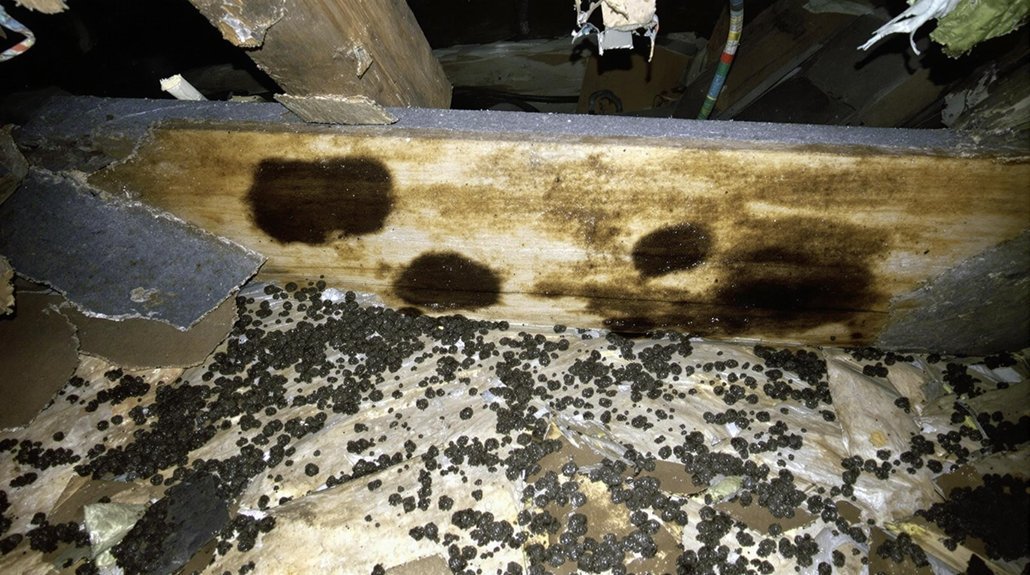
When a raccoon gains access to an attic, it often leaves behind feces and urine that can lead to significant health risks. These waste products can contain harmful pathogens and parasites. Exposure to raccoon feces and urine can result in diseases such as leptospirosis and raccoon roundworm. It is vital to address this contamination as soon as possible.
Feces removal is an essential step in the cleanup process. Professionals should handle this task to guarantee safety and effectiveness. They can identify the extent of the contamination and use proper protective equipment to prevent exposure. After feces removal, urine cleanup must also be performed. Urine can soak into insulation and wood, making it a challenging problem to resolve. Specialized cleaning solutions are often needed to eliminate the risks associated with urine contamination.
Odor Problems
The presence of raccoon feces and urine not only poses health risks but also leads to persistent odor problems in the attic. These odors can permeate the entire home, making it uncomfortable for residents. Identifying the odor sources is essential for effective odor removal.
Raccoon waste emits strong smells that can be difficult to eliminate. This can attract more pests and create a hazardous environment. Here are some common odor sources:
- Raccoon feces, which often contains bacteria and parasites
- Urine, which can soak into insulation and wood
- Decaying food or nesting materials left behind
- Dead raccoons, which can cause severe odors as they decompose
To address these odor issues, proper cleanup is imperative. It is crucial to remove all contaminated materials and sanitize the affected areas. In some cases, professional help may be necessary to guarantee complete odor removal. Ignoring these problems can lead to long-term health risks and a more difficult cleanup process. Addressing the odor promptly will improve the attic's environment and protect your home.
Increased Energy Costs
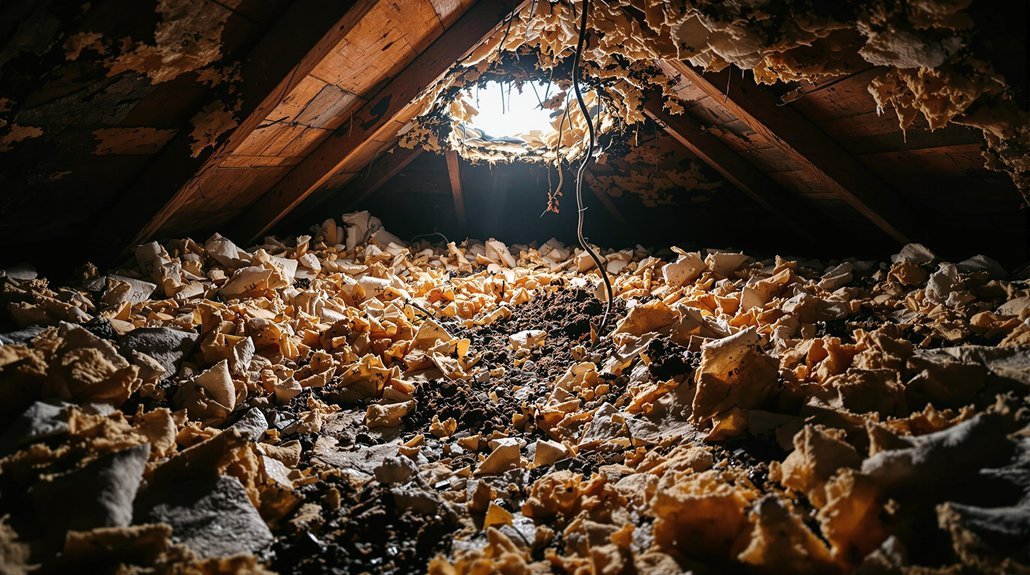
Raccoons can cause significant damage to insulation in an attic. This disruption can lead to air leaks, which makes heating and cooling systems work harder. As a result, homeowners may see increased energy costs due to higher HVAC usage.
Insulation Disruption
Damage to insulation in an attic can lead to significant energy costs. Raccoons can create havoc by tearing up insulation materials, which disrupts their ability to maintain proper temperature control. When insulation types such as fiberglass or foam are damaged, they lose effectiveness. This can make heating and cooling systems work harder, leading to increased energy bills.
Here are some common issues caused by insulation disruption:
- Heat Loss: Damaged insulation allows heat to escape, increasing heating costs in winter.
- Heat Gain: In summer, inadequate insulation lets heat in, resulting in higher cooling expenses.
- Moisture Problems: Compromised insulation can trap moisture, leading to mold growth and further damage.
- Reduced Comfort: Inconsistent temperatures in the home can make living spaces uncomfortable.
Insulation repair is vital to restore efficiency. Homeowners should address any damage quickly to minimize energy costs. Regular inspections can help identify early signs of disruption. By maintaining insulation, homeowners can save money and guarantee a comfortable living environment.
Air Leaks
Air leaks in an attic can greatly contribute to increased energy costs. When raccoons invade, they often damage insulation and create openings in the roof or walls. These openings allow conditioned air to escape and unconditioned air to enter, disrupting energy efficiency. As a result, heating and cooling systems work harder to maintain a comfortable temperature, leading to higher energy bills.
In addition to financial costs, air leaks can impact indoor air quality. Contaminants, dust, and allergens can enter the home through these leaks. This can cause health issues for occupants, especially those with respiratory problems. Proper sealing of any gaps or holes is essential for maintaining a healthy living environment.
Addressing air leaks not only helps in reducing energy costs but also improves overall energy efficiency. Homeowners should regularly inspect their attics for signs of raccoon activity and potential air leaks. Sealing these leaks can lead to significant savings on energy bills over time.
Increased HVAC Usage
Increased HVAC usage often results from the air leaks caused by raccoon activity in attics. These leaks allow conditioned air to escape, leading to higher energy consumption and decreased HVAC efficiency. When the HVAC system works harder to maintain desired temperatures, energy costs can surge unexpectedly.
The consequences of increased HVAC usage include:
- Higher utility bills due to excessive energy consumption.
- Increased wear and tear on the HVAC system, leading to potential breakdowns.
- Reduced indoor comfort as temperature regulation becomes less effective.
- A negative impact on the environment due to increased energy use.
To mitigate these issues, homeowners should address any signs of raccoon damage promptly. Sealing air leaks and reinforcing insulation can help restore HVAC efficiency. By improving the integrity of the attic space, energy consumption can be reduced, leading to lower utility bills. Regular maintenance of the HVAC system is also vital to guarantee peak performance. Taking these steps not only enhances comfort but also protects the home from further damage. Understanding the connection between raccoon activity and HVAC usage is important for effective home management.
Frequently Asked Questions
How Can I Prevent Raccoons From Entering My Attic?
How can you guarantee your home remains raccoon-free? Implement raccoon prevention tips by sealing attic entryways, installing screens, and removing food sources. Regular inspections and maintenance will further deter these opportunistic intruders from entering your attic.
What Signs Indicate Raccoon Damage in My Attic?
Signs of raccoon damage in your attic include visible raccoon tracks, which may appear as paw prints, and unusual attic noises, such as scratching or scurrying sounds, indicating their presence and potential intrusion into your space.
Are Raccoons Active During the Day or Night?
Although some may think raccoons are diurnal, they primarily exhibit nocturnal habits. Raccoon behavior typically involves being most active during the night, seeking food and shelter, which can lead to potential conflicts with humans.
How Do I Safely Remove Raccoons From My Attic?
To safely remove raccoons from your attic, utilize humane traps to capture them. Additionally, applying raccoon repellent can deter their return. Make certain to check local regulations regarding wildlife removal before proceeding with these methods.
Will Homeowners Insurance Cover Raccoon Damage Repairs?
Homeowners insurance policies may cover raccoon damage repairs, depending on the specific terms. It is essential to review your policy and consult with your insurance provider to understand eligibility for damage claims related to wildlife intrusion.