In the Midwest, common nuisance bird species include European starlings, house sparrows, rock pigeons, grackles, and Canada geese. These birds often adapt well to urban areas, leading to population increases. They can compete for resources, damage crops, and create noise disturbances. Starlings and sparrows aggressively dominate feeding sites, while geese can lead to sanitation problems in public spaces. Understanding these species and their behaviors is key to effective management. Exploring these topics further can provide insights into practical strategies for addressing nuisance bird issues and promoting balance in local ecosystems.
Key Article Highlights
- Common nuisance bird species in the Midwest include European starlings, house sparrows, rock pigeons, grackles, and Canada geese.
- These birds thrive in urban areas, competing for resources and disrupting local ecosystems.
- European starlings and house sparrows aggressively dominate feeding sites, reducing native bird populations and diversity.
- Canada geese and grackles create sanitation issues with their droppings and exhibit territorial behavior, especially during nesting.
- Effective management strategies include habitat modification, community collaboration, and education on bird behavior and control techniques.
Overview of Nuisance Birds
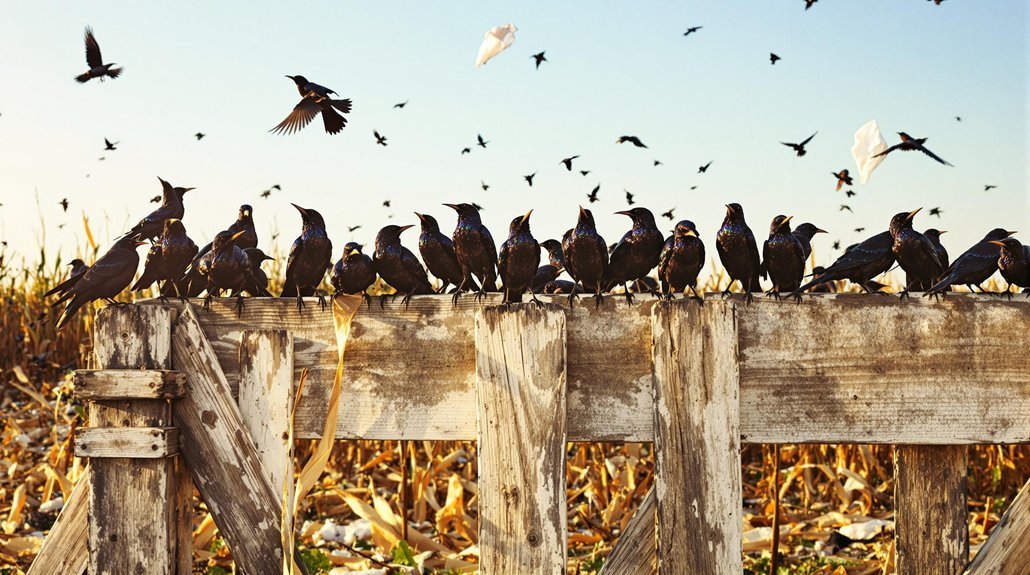
What makes certain bird species a nuisance in the Midwest? Nuisance birds can disrupt local ecosystems and create issues for residents. These birds often compete for resources, damage crops, and create noise disturbances. Common nuisance species include starlings, sparrows, and pigeons. Their adaptability allows them to thrive in urban and suburban environments.
Habitat alterations play a significant role in the presence of these birds. Changes in land use, such as the development of parks and residential areas, can provide ideal settings for these species. They find food and shelter easily in these modified habitats, leading to increased populations.
To effectively manage nuisance birds, one can adopt specific birdwatching tips. Observing their habits can help identify patterns and potential problems. For example, understanding feeding behaviors can inform strategies to deter them. Additionally, implementing habitat modifications, such as removing food sources and nesting sites, can reduce their presence.
European Starling
The European Starling is a common bird found in the Midwest. It is easily recognized by its shiny black feathers and distinct yellow beak. This species has a significant impact on local ecosystems through its behavior and feeding habits.
Identification and Behavior
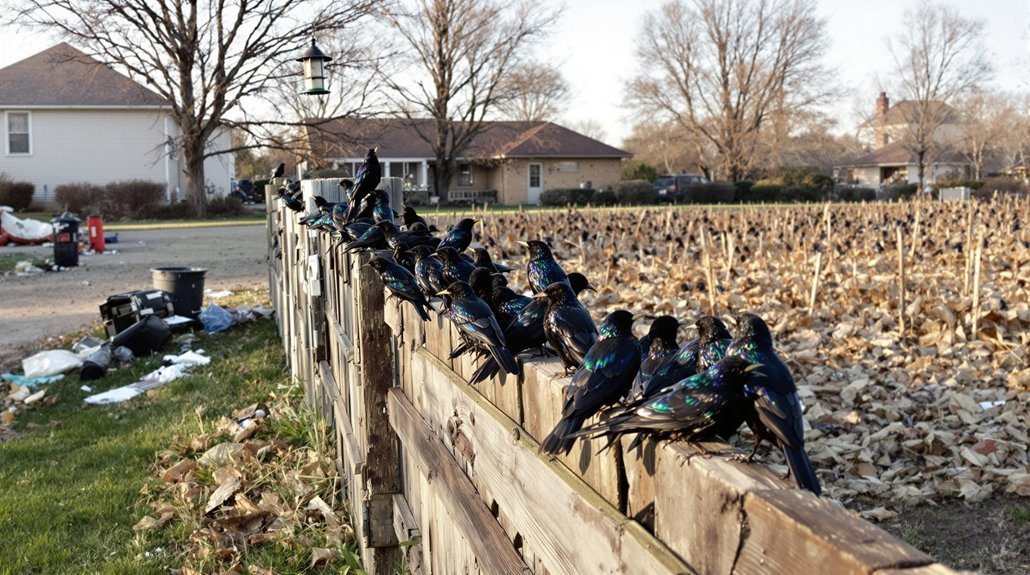
European starlings are often recognized by their striking iridescent feathers and sharp, pointed beaks. These birds display a mix of colors, including green, purple, and black. Their bodies are stocky, and they have short tails. For bird identification, note their small size, typically around 8 to 9 inches long. The yellow bill is particularly distinctive during the breeding season.
European starlings are social birds and often found in large flocks. Their behavioral patterns include foraging together for food, which usually consists of insects, fruits, and seeds. They are known for their adaptability, often thriving in urban environments. Starlings have a unique ability to mimic sounds, including the calls of other bird species and even human-made noises.
During the breeding season, males perform elaborate displays to attract females. These displays include vocalizations and aerial acrobatics. Starlings are also known for their communal roosting behavior, where they gather in large numbers at dusk. This behavior helps them evade predators and conserve heat. Understanding these traits is essential for effective bird identification and management strategies.
Impact on Ecosystems
A significant concern regarding European starlings is their impact on local ecosystems. These birds can disrupt ecosystem balance by competing with native species for food and nesting sites. Their presence often leads to a decline in native bird populations, as starlings are aggressive and highly adaptable.
European starlings primarily feed on insects, fruits, and seeds. This feeding behavior can reduce the availability of food for other species. As starlings dominate feeding areas, they limit the resources necessary for the survival of native birds. This competition can lead to a decrease in biodiversity, which is essential for healthy ecosystems.
Moreover, starlings are known to nest in large colonies. This behavior can further strain local resources and create an imbalance in the ecosystem. The increased population density of starlings can also lead to the spread of diseases that affect both wildlife and humans.
House Sparrow
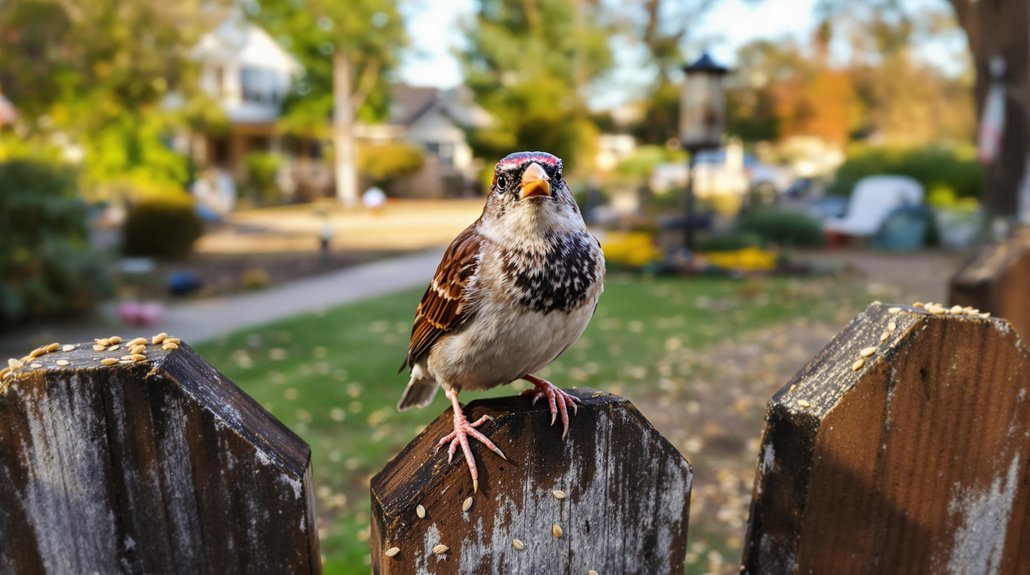
House Sparrows, small and adaptable birds, are commonly found in urban and rural areas throughout the Midwest. They are easily recognized by their brown and gray plumage. House sparrows thrive in human environments, often nesting in buildings, eaves, and other structures. Their behavior includes foraging for food scraps and seeds, making them frequent visitors to parks and outdoor dining areas.
These birds can become a nuisance due to their aggressive nature toward other bird species. House sparrows tend to dominate feeding sites and nesting spaces, which can reduce the diversity of local bird populations. Their droppings can also create sanitation issues in public areas.
Effective house sparrow control is necessary to mitigate these problems. This may involve limiting food sources, using physical barriers to block nesting sites, or employing traps to reduce their numbers. It is important to remember that house sparrows are protected under the Migratory Bird Treaty Act, so control methods should comply with local regulations.
Understanding house sparrow behavior and implementing appropriate control measures can help maintain a balanced ecosystem while minimizing their impact on human activities in the Midwest.
Rock Pigeon
Rock Pigeons, also known as rock doves, are another common bird species found in the Midwest. They thrive in urban and suburban environments, often seen roosting on buildings and bridges. Rock pigeons prefer habitats that provide access to food and shelter. These habitats include parks, plazas, and city streets, where they can easily find scraps of food.
Rock pigeon behavior is characterized by a strong tendency to flock. They are social birds that often gather in large numbers, especially when feeding. Their diet mainly consists of seeds, grains, and human food waste. These pigeons are known for their homing ability, which allows them to return to their nests over long distances.
While rock pigeons can be charming to observe, they can also become a nuisance. Their droppings may accumulate on buildings and public spaces, leading to cleanliness issues. Additionally, they can cause damage to structures by nesting in areas that block drainage systems. Understanding rock pigeon behavior and habitats is essential for managing their populations effectively in urban settings. Proper mitigation strategies can help reduce their impact while maintaining a balanced ecosystem.
Grackles
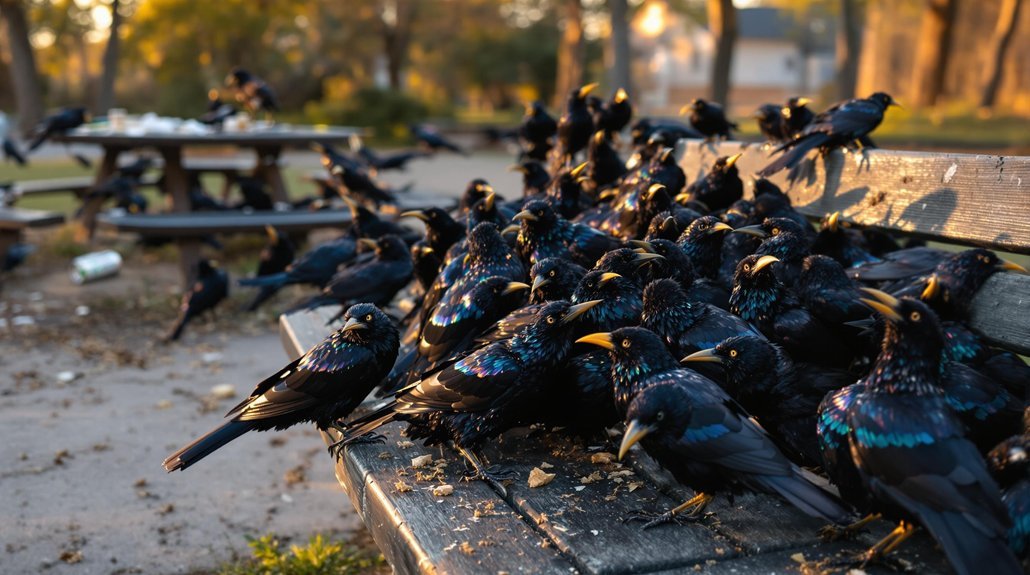
Grackles, with their iridescent feathers and loud calls, are a common sight across the Midwest. These birds are known for their distinctive habits, which can lead to nuisance issues in urban and rural settings. Understanding grackle habits is essential for managing their presence effectively.
- Feeding Behavior: Grackles often forage in large groups, scavenging for food. They are attracted to garbage and bird feeders, which can lead to overpopulation in specific areas.
- Nest Building: These birds prefer to nest in trees or shrubs, often in colonies. Their nests can be noisy and messy.
- Aggressive Nature: Grackles can be territorial, especially during breeding season. They may chase away smaller birds from feeders or nesting sites.
- Seasonal Patterns: Grackles migrate in the spring and fall. Their presence fluctuates, with larger groups seen during migration.
To implement effective grackle control, consider removing food sources, securing trash bins, and using bird deterrents. By addressing the habits of grackles, one can minimize their impact on local environments and maintain a peaceful atmosphere.
Canada Goose
Following the discussion on grackles, another common nuisance bird in the Midwest is the Canada Goose. Known for their distinctive black heads and long necks, these geese can become a problem in urban and suburban areas. Their population has increased considerably due to habitat changes and lack of natural predators.
Canada Goose behavior often includes aggressive tendencies, especially during nesting season. They are territorial and will defend their nesting sites, which can pose risks to pets and humans. Additionally, their droppings can create unsightly and unsanitary conditions in parks, golf courses, and waterfronts.
Effective habitat management is key to controlling Canada Goose populations. This includes strategies such as reducing sources of food, modifying landscapes to discourage nesting, and using visual or auditory deterrents. Maintaining native vegetation can also help create a less inviting environment for these geese.
Public awareness and education are essential in managing interactions with Canada Geese. Communities can work together to implement these strategies to minimize the issues associated with this nuisance bird. Understanding their behavior and habitat needs is vital to effective management efforts.
Red-Winged Blackbird
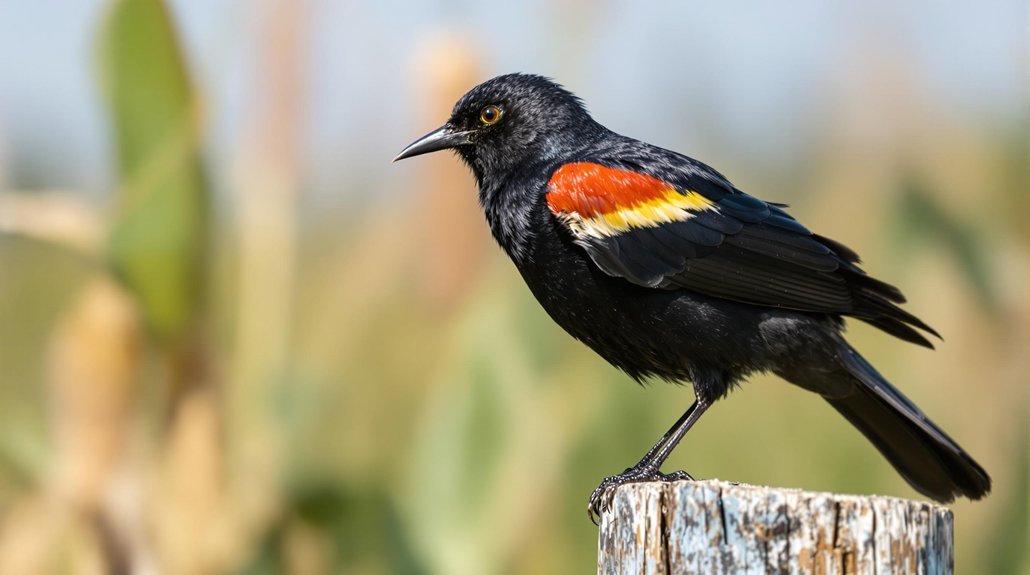
Among the various bird species in the Midwest, the Red-Winged Blackbird is often considered a nuisance due to its loud calls and aggressive behavior during the breeding season. These birds display distinct red and yellow shoulder patches, which they use to establish territory. Their red winged habits contribute to their reputation among farmers and residents.
The following points highlight key aspects of their behavior:
- Nesting Behaviors: Red-Winged Blackbirds typically nest in marshes or wetlands, using reeds and grasses to create their nests.
- Territorial Aggression: Males are known to aggressively defend their territory from intruders, including humans and other birds.
- Vocalizations: Their loud and persistent calls can be disruptive, especially during the morning hours when they are most active.
- Feeding Habits: They often forage in agricultural fields, where they can be seen as pests due to their feeding activities.
House Finch
The House Finch is a common sight in urban and suburban areas across the Midwest. This small bird is known for its cheerful chirping and vibrant plumage, often seen feeding in backyards and parks. The house finch behavior includes foraging in groups, which helps them locate food more effectively. They are often found at feeders, enjoying seeds and fruits.
House finches are adaptable birds. They can thrive in various environments, making them a common nuisance for homeowners. Their nesting habits are notable; they prefer to build their nests in sheltered locations. This can include eaves, ledges, and even hanging planters. House finch nesting typically involves using twigs, grass, and other materials to create a sturdy structure. They may raise multiple broods in a single season, which can lead to population increases in certain areas.
These birds are generally harmless but can become a nuisance if they nest in inconvenient locations. Their persistent nature and ability to thrive alongside humans can lead to conflicts. Understanding house finch behavior and nesting patterns is essential for managing their presence in urban and suburban settings.
Strategies for Management
Managing house finches effectively can help reduce their impact on homes and properties. Implementing strategies that focus on preventive measures and habitat modification can make a significant difference. Here are four key strategies to manage house finches:
- Remove Food Sources: Keep bird feeders clean and avoid leaving food outside. If finches are attracted to feeders, consider using seed types that are less appealing to them.
- Modify Habitat: Trim shrubs and trees that may provide nesting sites. Reducing dense vegetation can deter house finches from settling nearby.
- Use Deterrents: Install physical barriers such as netting or spikes on ledges where finches may roost or nest. This can prevent them from taking residence in unwanted locations.
- Educate the Community: Encourage neighbors to adopt similar strategies. Community-wide efforts can enhance the effectiveness of management practices.
Frequently Asked Questions
What Attracts Nuisance Birds to Urban Areas in the Midwest?
Nuisance birds are attracted to urban areas primarily due to abundant food sources and accessible nesting sites. Urban environments provide easy access to discarded food and sheltered spaces, supporting their survival and reproduction in these locations.
Are Nuisance Birds Protected by Law in the Midwest?
Like shadows cast by a setting sun, nuisance birds often elude clear categorization. Many species enjoy legal protections under conservation laws, emphasizing the balance between management practices and the commitment to preserving avian populations.
How Can I Identify Different Nuisance Bird Species?
To identify different nuisance bird species, use bird identification tips such as observing size, color, and behavior. Species comparison charts can also assist in distinguishing between similar-looking birds effectively and accurately.
What Are the Health Risks Associated With Nuisance Birds?
Nuisance birds can pose health risks through the transmission of bird-borne diseases, such as histoplasmosis and salmonellosis. Effective pest control measures are essential to mitigate these risks and protect public health in affected areas.
Can Nuisance Birds Cause Property Damage?
Nuisance birds can act like uninvited guests, causing significant property damage. Implementing effective bird control methods and property protection strategies is essential to mitigate risks and safeguard structures from potential harm caused by these birds.