Squirrels are drawn to attics for several reasons. They look for nearby food sources like nuts and seeds, often found in urban gardens. Attics provide ideal nesting materials, such as insulation, which offer warmth and comfort. These spaces also protect them from predators, as they are enclosed and elevated. Squirrels benefit from easy escape routes and good visibility to spot threats. Seasonal changes, such as colder weather, increase their need for shelter. Understanding these factors can help homeowners prevent squirrel nesting and manage wildlife entry effectively. There are further insights available to assist in this matter.
Key Article Highlights
- Abundant food sources in urban gardens, like fruits and seeds, attract squirrels to nearby attics for easy access to sustenance.
- Warmth and insulation provided by attics create a comfortable nesting environment, appealing to squirrels seeking shelter from harsh weather.
- Enclosed attic spaces offer protection from predators, making them a safe nesting choice for squirrels.
- Seasonal behavior, such as winter preparation and food storage, drives squirrels to seek out secure locations like attics.
- Limited entry points in attics deter larger animals, enhancing safety and making them attractive nesting sites for squirrels.
Food Sources Nearby
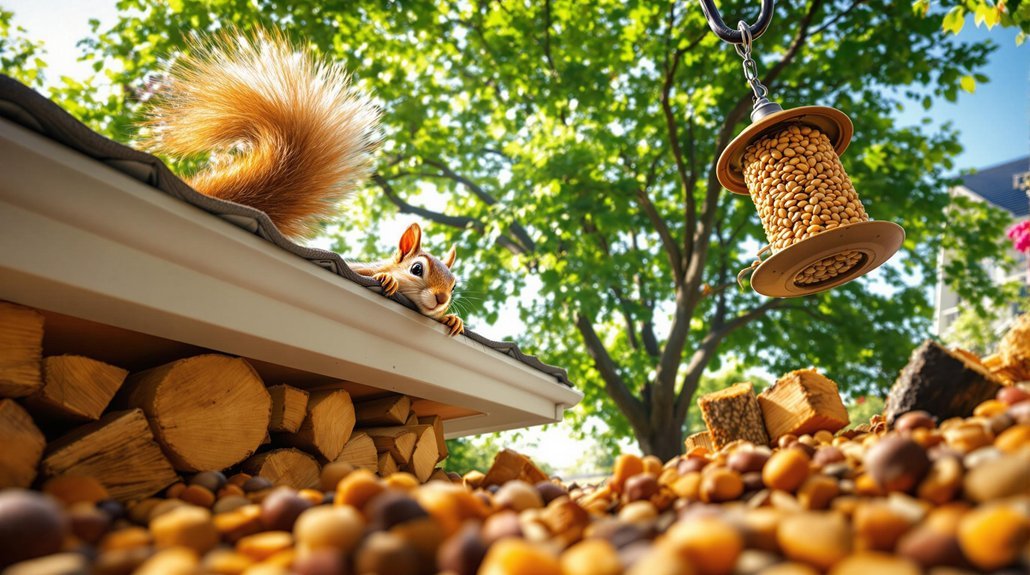
Squirrels are often attracted to attics due to the availability of nearby food sources. These food sources can greatly influence their decision to nest in urban areas. Natural food, such as nuts, seeds, and fruits, is essential for squirrels' survival and reproduction. When urban gardens provide these food types, they become hotspots for squirrel activity.
Urban gardens often contain a variety of plants that bear fruits and seeds, creating a diverse food supply. Additionally, some gardeners unintentionally leave food scraps that can attract squirrels. This easy access to food encourages squirrels to inhabit nearby spaces, including attics, as they seek shelter near these reliable food sources.
The presence of trees in urban environments further enhances this situation, as squirrels can easily navigate from their food sources to potential nesting sites. As a result, homeowners should be aware of how their landscaping and gardening practices may influence local wildlife. Managing food availability can help reduce the attraction of squirrels to attics. By understanding these dynamics, homeowners can take preventive measures to protect their homes while still enjoying the beauty of urban gardens.
Ideal Nesting Materials
Squirrels require suitable nesting materials to create a comfortable home in an attic. Soft insulation materials, such as fibrous substances, offer warmth and protection. Additionally, natural found objects like leaves, twigs, and feathers help to build their nests effectively.
Soft Insulation Materials
Within the cozy confines of an attic, soft insulation materials serve as ideal nesting materials for various wildlife, including squirrels. These animals have specific nesting preferences that guide them to choose suitable locations for their homes. Among the different insulation types, fiberglass and cellulose are particularly appealing.
Fiberglass insulation provides a soft texture that squirrels find comfortable. Its loose structure allows squirrels to burrow and create a secure nest. Similarly, cellulose insulation, made from recycled paper products, offers warmth and a cozy environment for nesting. Its fluffy consistency enables squirrels to shape their nests easily.
Squirrels are instinctively drawn to areas that provide safety and warmth, making soft insulation materials attractive. They often seek out attics for the shelter these insulation types provide. The insulation not only keeps the attic warm but also offers a quiet, protected space far from predators.
Understanding these nesting preferences can help homeowners identify potential issues with wildlife intrusion. Proper attic insulation and barriers can deter squirrels and prevent them from making their homes in an attic, ensuring a peaceful living space for residents.
Natural Found Objects
Natural found objects play a significant role in the nesting habits of wildlife, including squirrels. These creatures have specific nesting preferences, often seeking materials that provide comfort and security. The use of natural materials not only enhances the nest's durability but also offers natural camouflage, helping to protect the young from potential threats.
Squirrels often gather various items from their environment to construct their nests. Here are four ideal natural found objects they may use:
- Leaves – Soft and pliable, leaves provide warmth and insulation.
- Twigs and branches – Sturdy and strong, these create a solid structure for the nest.
- Moss – This material offers cushioning, helping to keep the nest cozy.
- Feathers – Lightweight and soft, feathers add comfort and insulation.
The combination of these materials allows squirrels to build effective nests that meet their needs. By understanding these natural found objects, homeowners can better appreciate why squirrels may be attracted to their attics. Providing suitable nesting materials can inadvertently invite these creatures into your space, highlighting the importance of awareness in wildlife management.
Shelter From Predators
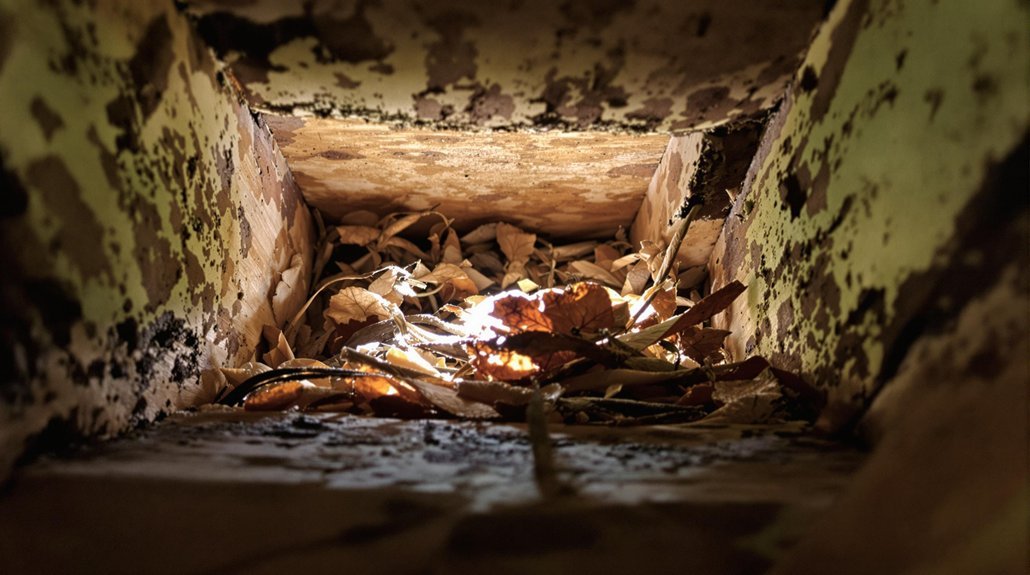
Squirrels need safe places to nest and raise their young, away from potential predators. Creating elevated escape routes can help them quickly reach safety if threatened. Additionally, reducing human disturbance can provide a more secure environment for these animals.
Safe Haven for Nesting
Creating a safe haven for nesting is crucial for squirrels seeking refuge from predators. Squirrels are vulnerable to various threats, including hawks, snakes, and domestic pets. Consequently, they choose locations that provide secure environments for raising their young. Understanding their nesting preferences can help homeowners identify what attracts these animals to their attics.
To provide a safe haven, squirrels typically look for:
- Enclosed Spaces: Areas that are hidden from view and hard to access by predators.
- Insulation: Warm, protected spots that shield them from harsh weather and potential threats.
- Distance from Ground: Elevated sites that offer a better vantage point for spotting dangers.
- Limited Entry Points: Access to small openings that deter larger animals from entering.
These factors create a suitable environment for nesting. When squirrels find an attic that meets these criteria, they are more likely to settle in. Homeowners should be aware of these nesting preferences to avoid unintentional infestations and guarantee the safety of both the squirrels and their household.
Elevated Escape Routes
A secure nesting environment not only provides warmth and shelter but also offers escape routes that are essential for survival. Squirrels are prey for various predators, including hawks, owls, and domestic pets. Consequently, they require elevated pathways to safely navigate their surroundings. These pathways allow squirrels to move quickly and avoid danger while searching for food or returning to their nests.
Attics provide a unique advantage for squirrels. The height of an attic offers a strategic location for escape routes. From this vantage point, squirrels can easily spot potential threats. When startled, they can swiftly retreat to their nests, relying on the structure's elevation as protection.
Additionally, attics often connect to trees or other high structures, enhancing the network of escape routes available to squirrels. This connection allows them to leap from one elevated surface to another, reducing their risk of being caught. In conclusion, the presence of elevated pathways in attics serves as a critical factor in attracting squirrels. These escape routes not only support their survival but also contribute to their overall sense of security while nesting.
Limited Human Disturbance
Seeking refuge from human activity, squirrels find attics to be an ideal nesting site. These spaces provide limited human disturbance, which is essential for their safety. Attics offer a quiet environment, allowing squirrels to avoid predators and thrive in a secure location.
Several factors contribute to this attraction:
- Isolation from Human Interaction: Attics are often removed from regular human activity, providing a safe zone.
- Reduced Noise Levels: The insulation of an attic helps minimize noise, creating a peaceful nesting environment.
- Protection from Predators: Attics serve as a barrier against common ground predators, ensuring that squirrels can raise their young without constant threat.
- Limited Access Points: The structure of attics often limits how easily predators can enter, further enhancing the safety of the nest.
Warmth and Comfort
How do squirrels find the perfect place to nest? A significant factor is warmth and comfort. Squirrel behavior shows that these animals seek out locations that provide shelter from harsh weather. Attics often offer the right conditions for nesting. They are typically insulated and shielded from cold winds and rain, making them an attractive option for squirrels.
In addition, attics usually maintain a stable temperature, which is essential for the survival of young squirrels. The warmth found in these spaces can be particularly inviting during winter months. Squirrels are instinctively drawn to areas where they feel secure and can thrive.
Furthermore, the materials commonly found in attics, like insulation and wood, can be used by squirrels to create cozy nests. These materials help to retain heat, adding to the comfort of the environment.
Access Points in Structures
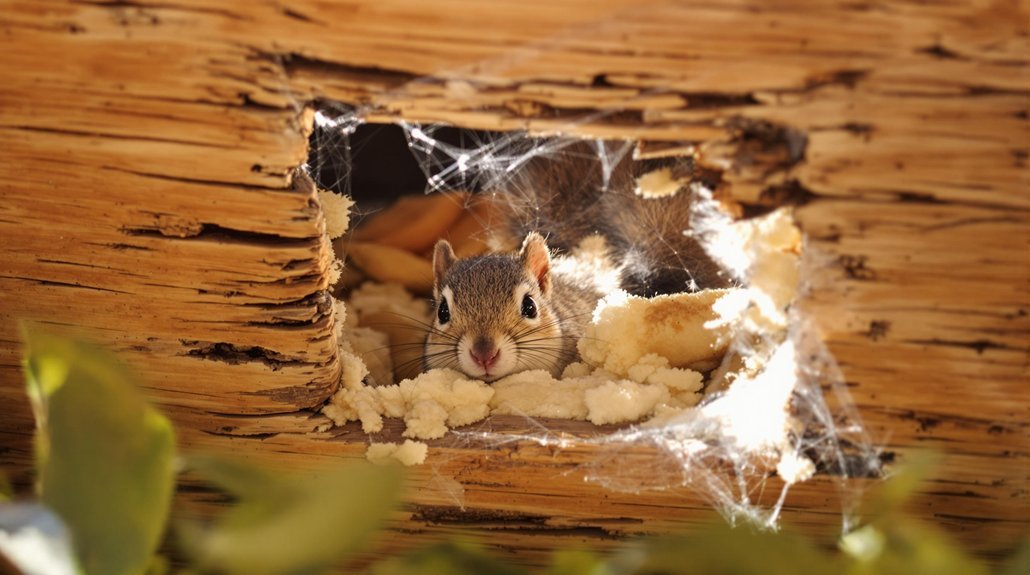
Identifying access points in structures is essential for understanding how squirrels gain entry to attics. These entry points often exploit structural vulnerabilities that may not be immediately apparent. By recognizing these weaknesses, homeowners can take necessary steps to prevent squirrel infestations.
- Gaps in Rooflines: Small openings where the roof meets the walls can serve as easy entry points for squirrels.
- Vents and Chimneys: Unsecured vents or chimneys can provide direct access to the attic. Installing proper coverings can mitigate this risk.
- Soffits and Fascia: Damaged or loose soffits and fascia boards can create gaps that allow squirrels to enter. Regular inspection and maintenance are vital.
- Foundation Cracks: Cracks in the foundation may lead to larger openings that squirrels can exploit. Sealing these cracks is essential for keeping pests out.
Seasonal Behavior Patterns
Understanding the seasonal behavior patterns of squirrels can help homeowners anticipate the times when these animals are most likely to seek shelter in attics. One essential time is during the mating season, which typically occurs in late winter to early spring. During this period, squirrels become more active in their search for safe nesting sites. They may venture into attics in search of a warm, secure location to raise their young.
As summer progresses, squirrels focus on gathering food. However, as autumn approaches, they begin winter preparation. This is a vital time for squirrels, as they seek out snug spots to store food and find shelter from the cold. Attics can provide an appealing environment for this purpose, especially if there are existing access points.
Homeowners should be vigilant during these seasonal shifts. Regular inspections of the attic and surrounding areas can help prevent squirrels from establishing nests. By understanding these behavior patterns, homeowners can take proactive measures to secure their homes against squirrel intrusions during mating season and winter preparation periods.
Human Habitats and Landscaping
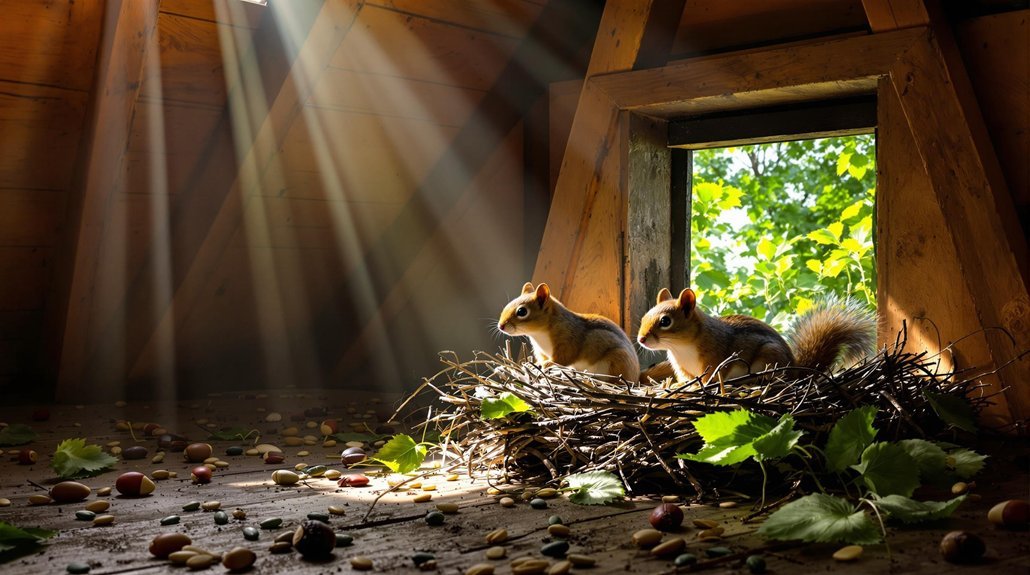
Many homeowners unknowingly create inviting environments for squirrels through their landscaping choices. Urban landscaping can greatly influence local wildlife, including squirrels. Habitat modification, aimed at making yards aesthetically pleasing, often provides easy access to food and shelter for these animals.
To mitigate the risk of attracting squirrels to your attic, consider the following landscaping adjustments:
- Remove Food Sources: Keep bird feeders clean and store pet food indoors to avoid attracting squirrels.
- Trim Overhanging Branches: Cut back tree branches that extend close to roofs, preventing squirrels from jumping onto the attic.
- Seal Entry Points: Inspect and seal potential entry points around the home, especially in areas near landscaping features.
- Limit Dense Vegetation: Reduce dense shrubs and bushes that can serve as hiding spots for squirrels, making your yard less appealing.
Frequently Asked Questions
How Can I Tell if Squirrels Are in My Attic?
When twilight descends, watch for signs of squirrel behavior in your attic. Listen for scratching or chattering sounds, observe nesting signs like shredded materials, and check for droppings to confirm their presence.
Do Squirrels Prefer Certain Types of Attics Over Others?
Squirrels tend to prefer attics with easy accessibility and ample nesting materials. Attics that provide warmth, shelter, and proximity to food sources are more likely to attract squirrels seeking a safe environment for nesting.
What Time of Year Do Squirrels Typically Nest in Attics?
Squirrels typically exhibit nesting habits during late winter and early spring, aligning with their seasonal behavior. This period provides ideal conditions for raising young, as food sources become more abundant and temperatures are milder.
Can Squirrels Damage My Attic Insulation or Wiring?
Yes, squirrels can cause insulation damage and compromise wiring within attics. Their nesting behavior often leads to tearing insulation and chewing on electrical components, posing risks of fire hazards and reduced energy efficiency. Prompt removal is essential.
Are Certain Tree Species More Likely to Attract Squirrels to My Home?
Certain tree species can indeed attract squirrels to your home. Squirrels prefer trees that provide ample food sources, such as oak and walnut, which offer acorns and nuts, making them more likely to visit residential areas.